BLOG
Competence Means Knowing When Not To
June 24, 2026
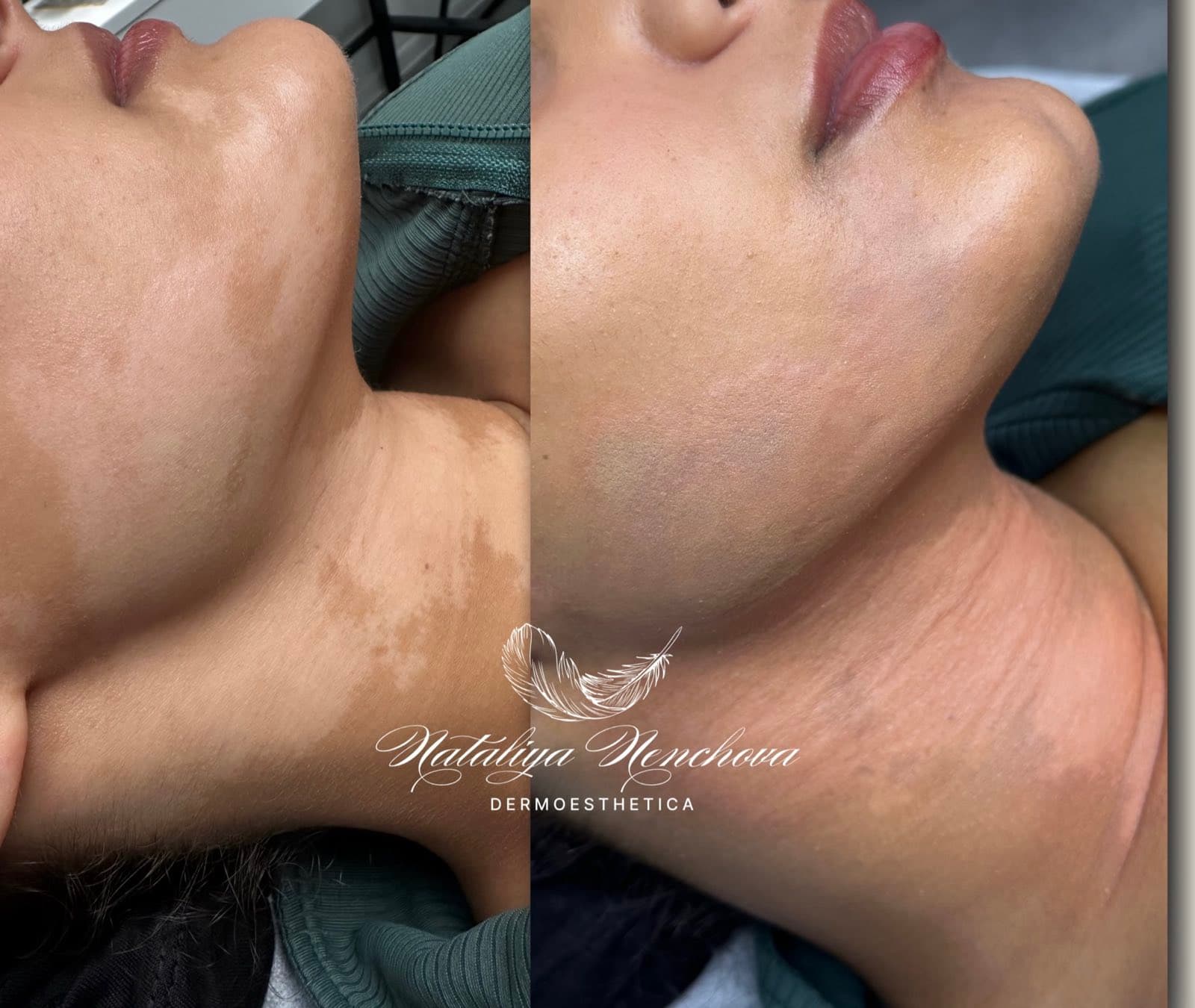
Competence isn't being able to perform every procedure. Competence is knowing when you shouldn't.
In my work as an expert and trainer in aesthetic camouflage, I've always believed that a good specialist is recognized not only by the results they achieve, but by the decisions they make.
As dermopigmentation specialists, we must clearly know the boundary between our own competence and that of medical specialists. It's exactly that boundary that guarantees the client's safety and sets a true professional apart from someone who simply performs a procedure.
There are cases we don't take on.
Moles, warts, skin lesions, undiagnosed vitiligo, and any condition with contraindications or without a clear medical diagnosis.
In these cases, we don't compromise the skin's integrity.
We don't make compromises.
We don't experiment.
Our responsibility is to refer the client to a dermatologist, because medical assessment always comes before aesthetic intervention.
Recently, a client came to my practice with a birthmark on her face that was lighter than the surrounding skin. Her wish was to use aesthetic camouflage to achieve a more harmonious, even skin tone.
Before any procedure was planned, she had a consultation with a doctor. Following the medical assessment, it was confirmed that there were no contraindications and that aesthetic camouflage could be performed safely.
Only then did my work begin – using a precise technique to match the depigmented area with the surrounding skin and achieve the most natural result possible.
This case is yet another proof that a successful result begins long before the procedure itself.
It begins with the right judgment.
As a trainer, this is one of the most important lessons I pass on to my students. I don't just train specialists to master a technique. I train them to understand the responsibility our profession carries, to know their own competencies, and to work in sync with medical specialists whenever the case requires it.
Because the aesthetic dermopigmentist and the doctor aren't competitors.
They're two sides of one shared goal – the client's safety and the best possible result.
I'm convinced this is true professionalism. Not being able to perform every procedure, but knowing when to take on a case and when it's right to entrust it to a doctor.